Sunday, February 10, 2019

The significance of 6 February in the calendar of the United Church of Papua New Guinea and why it is important to commemorate it

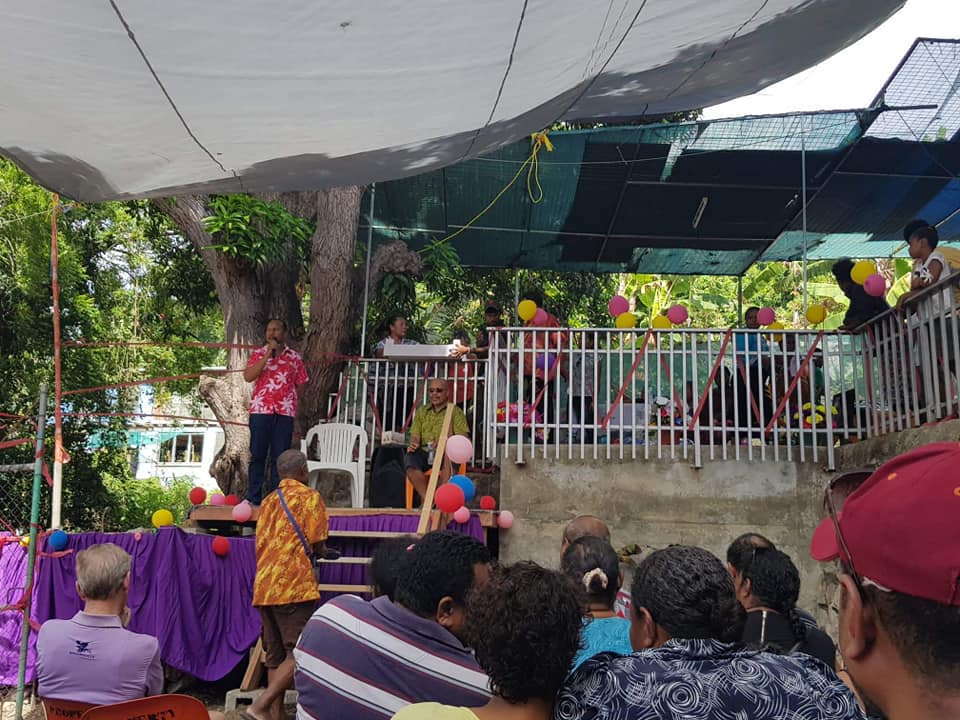
Every 6 February, since 1988, the United Church of Papua New Guinea celebrates its Children Day.  At the Poreporena Lahara United Church, this day is celebrated on the second Sunday of February because the first Sunday of every month is always reserved for the “Anibou” (Holy Communion).
 
But why is this day - 6 February – so important that it warrants a place in the annual calendar of the Church? 

It was on 6 February, 1987, while Reverend Misian and his wife, Marama Helen Misian, were travelling up to the township of Ramu to take up their first missionary posting that they lost their daughters to the seas after a plane crash.  In memory of the tragic deaths of these two beautiful souls, the United Church decreed for this day to be celebrated every year, to commemorate their passing, as well as to strengthen and consolidate our faith in God almighty, against the adversities of the world.

Norah Misian and Shaol Misian were both seven and 18 months old, respectively, when they lost their lives in the service of the United Church of Papua New Guinea.

The family, together with seventeen others, were on a Talair Embraer MB 110P2 registration P2-RDM flight which ditched into the sea in very poor weather short of Hoskins airport from Rabaul.  Only three of the seventeen survived.[1]

Reverend Mision had just graduated the previous year from the United Church’s Rarongo Theological College in the East New Britain Province.  He was now on his way to assume his first-ever posting as an United Church minister of religion on that fateful flight.

It was related to the congregation by the coordinator of the Lahara United Church Children and Youth Ministry (CYM), that as soon as the plane crashed into the sea, the roof immediate broke away exposing the passengers to the elements.  Marama Helen Misian, in fear of going down with the plane quickly threw her 18-month old daughter out the plane.  It is said that the poor baby died on impact.  Reverend Misian also did the same for his elder child, hoping that she would float while he and the Marama made their way out.  But alas! Norah got pulled away by the raging tide and was lost to the sea.

The good Reverend himself was also in the same dilemma: his seatbelt was stuck and he struggled to loosen it while the plane sank.  Just as he was on his final breath, the seatbelt came loose; quickly breaking away from the seat, he kicked himself up to the surface.  Marama was already some meters from where the plane had gone down, frantically looking out for her children.

The story goes that quickly swimming up to his wife in the raging seas, the reverend touched her and beckoned her to leave their children to the sea and swim for safety.  After battling the seas for a couple more hours or so, they were both now very exhausted and on the verge of giving up.  But they continued to urge and encourage themselves on; In their minds, they were both alive because God had a plan for them.  They swam on. 

Suddenly, the Reverend’s feet touched a rock.  Imagine a rock out in open sea!  Unbelievable!  But God was there.  Quickly calling out to his wife, he urged her to swim towards him.  The time was 09:30 in the morning.  They both stood on the rock, far out at sea, with no land in sight, and rested their tired and weary bodies, while tears streamed down their eyes when they remembered their children.  As they rested, they offered a prayer of Thanksgiving to God.  They prayed for the souls of their two children, and they thanked God for their brief lives with them; and then they prayed for God’s strength for the final push toward safety.

These two soldiers of God were “Walking the Talk”: As Christians, one must always praise God under all circumstances; because God is the maker of everything.  Who are we to question His actions in our lives?

After they whispered “amen”, they hugged for strength and comfort, not knowing whether or not they would both make it to safety but for their faith in God.  Then they left their brief sanctuary, and swam on. 

The CYM coordinator related that from that rock, the Reverend and Marama swam and battled the seas for another five hours!  What was five hours when God had given them strength on the rock far out at sea, to swim.  They swam.

Finally, they swam into the safety of Galoale beach.  Galoale village is a few kilometres from Hoskins station.  In fact, it is two or three villages away from the station.  The kind people on Galoale quickly saved them from the sea and brought them to the nearby Catholic Health Centre for treatment. 

Reverend Misian and his wife, Marama Helen Misian, are the true epitome of United Church missionaries who, since the arrival of the Southseas missionaries in the 1870s, have trudged on, with only their God-given faith, to bring the gospel to the corners of the world, or in our case, throughout the United Church areas in PNG. 

True to his calling, a mere month after the tragic incident, Reverend Misian and his faithful wife, Helen, left for their station in Ramu to take up their post.  His faith, love, and Devotion for the Maker surpassed everything else in the world.  While they both mourned the passing of their children, they rested assured that their souls were with the Lord.  So, they went forth to Ramu, and beyond, to do their Christian duties.

As I write this tragic story of Love and Devotion, Faith, Perseverance and Praise for God under all circumstance, I am reminded of another similar story, that of a prominent lawyer in Chicago, USA, named Horatio Gates Spafford. 

After the death of his four-year-old in 1871, from Scarlet fever, Spafford decided his family should take a holiday somewhere in Europe.  He chose England for this holiday.  Because of his business, he sent his wife and four daughters ahead across the Atlantic on the steamship “Ville du Havres”.  Their ship was tragically struck by an iron sailing ship, and 226 people lost their lives, including all four of Spafford’s daughters.  Only his wife, Anna Spafford survived this tragedy.  According to Bertha Spafford Vester, a daughter born after the tragedy, Spafford wrote the song “It is well with my soul” on this journey.[2]

What is it that make these men of God tick against all odds?  Is it faith? Conviction?

At the other extreme, what about those others, who, when faced with such extreme tragedies and misfortunes, had quickly opted for the safety of their own village and locales; leaving their flocks unattended?  

My father, the late Reverend Ray LAHUI-AKO was one such men of God.  In 1976, when I was seven going onto eight, the United Church sent him and my mother to the Siwai area of mainland Bougainville (now Autonomous Region of Bougainville) to do his practical as a student missionary. 

If there were other viable options in the urban centres, why did dad chose this remote part of the country to do his practical?

We arrived into Hurai from the Tonu mission station after a couple of nights with Rev Joseph Duvuloco, and were lodged into a run-down house of one of the teachers at the Kunu Community School, who had since left.  I call it run-down because one side of the house was practically falling down so had to be propped up with a couple of hastily cut branches to allow the incoming “redskinned” student pastor, his wife, and two boys, to stay dry during the rains.

Such was my father’s faith in God almighty that we stayed on; with him always saying that so long as the house was standing, it was alright: and his famous phrase: “how much worse can this get; it will only get better from here on, trust God.” 

On our first Sunday outing to Dusei village (which is about five kilometres from Hurai by foot), we had to swim across a fast-flowing river.  My mother had my two-year-old brother in her arms; as she swam/waded across, one of her feet slipped and she let go of my brother into the flowing river.  Dad had to dive across quickly from where he was walking with him, to save him.  My brother was feverish that night and I was sent out in the dark to walk another two kilometres to the aid post to seek help from the orderly.

That night, dad maintained his stance: that things would only get better from there.  Although it would be only me accompanying him to the surrounding villages every Sundays for the moment.  Sometimes we left on Saturday afternoons in order to get the furthest village which was about a half-day’s walk from where we were.  Then we would slowly make our way home.  Every Sunday, dad would minister to up to five villages before we both reached home in the dark of the night.

Towards the end of that year, my father stood humbly before Bishop Reverend Leslie Boseto and was ordained as a fully-fledged Minister of the United Church of Papua New Guinea.  My mother stood proudly by his side.  This occurred at the Tonu Mission station.  They both remained true to their calling until their retirement 2009, nearly 33 years later.

If my dad’s idea of “things can only get better from here on, trust God” is any indication of the life he led, then I stand true to my faith in God almighty; as Isaiah said, “Those who trust in the Lord, will soar like eagles; they will walk and not get tired . . . “

I salute you, Reverend Mision, and Marama Helen Mision, and pay my respects to your late daughters Norah and Shaol, for their undivided love and trust in your mission.  Yours is a faith that can move mountains.  I will continue to commemorate this day in hour and remembrance of your two daughters.  May their kind and gentle souls continue to rest in God’s eternal peace.

The 6th of February remains a true part of our Church’s annual calendar and should remind us all of the tremendous sacrifice, and the trials and tribulations all missionaries, reverends, and pastors, together with their wives, have had to endure and overcome for the love of our Father, the Lord Jesus Christ, so that we all may be saved and have eternal life after death.

Tuesday, January 1, 2019

Where theres a will, theres a way: Changing the Motuan age-old "Lahi-Dairi" custom to suit 21st century requirements and family re-configurations

My dad passed away in the earlier hours of Saturday, 8 December, 2018, surrounded by his love ones, at our residence at Nese Heights, Hanuabada village, Port Moresby.  As his father had done to him about 36 years ago, so he did to me: He passed on, while both I (and my younger brother, who is employed with OTML), were away on duty travel in the service of our great nation.
 
As my father's eldest son, the mantle of responsibility to bury him fell on my untried shoulders, or so me and my brother thought.  We both felt that it was our duty to see that his transition from this life into the next, was done according to the ancient Motuan tradition.  However, by taking on this mantle of leadership, and managing it all the way until his "lahi-dairi", I was deemed by my father's living male siblings as having "usurped" their rights to dad's final walk into infinity.
 
They may have been right; while again, they may have been wrong.  I leave this to the elders of the Motu-Koitabuan tribes to determine for themselves.
 
This being said, the day-to-day living of my extended family, particularly, the circumstances surrounding the relationship between the siblings since dad's birth in wartime Manu-manu, played a very critical role in my actions, which I hope, can now pave the way for the modernization of our Motu-Koitabuan, but predominantly, Motuan culture in the 21st century. 
 
Master of Ceremony, Nou Ako, officiating at the Lahi Dairi ceremony
Background
 
Dad was born the eldest of 14 siblings: four male, and ten female.  Of these, six, including dad, have passed on.  Being the eldest, dad, had an important hand in their upbringing, acting as a surrogate mother to them, as they were all growing up.  Most of these siblings were born less than two years of each other.  Grandfather Lahui Ako was a very busy man, it would seem.  My grandfather was a medical orderlie during WW2, and after their return with the rest of the Hanuabada evacuees from Manumanu, grandfather was employed with the Port Moresby General Hospital until his retirement in the late 1970s.  The daily upkeep of feeding this huge family, obviously fell on dad's young shoulders.  By the time he was six, he was already spearfishing in the reefs to supplement what grandfather would bring from work.  This became harder when grandfather bundled him off to the LMS school on Metoreia because this meant that when school ended in the early afternoons, he went to the beaches to look for shellfish, or out to the reefs to look for fish. 
 
When he left Port Moresby in 1972 to the Rarongo Theological College in the East New Britain Province to pursue his inner most call, his calling took him from there to Adelaide, South Australia, for his practical, then to Siwai, now in the AROB where he got ordained as a fully-fledged United Church Minister for Religion, and then in 1976 into the new PNGDF, where he took over as one of the first four (4) chaplains to localize the positions from the chaplains of the ADF. 
 
In 1988, dad was finally posted to Port Moresby, nearly 16 years after leaving home, to the Taurama Barracks, where in 1991, he was replaced by Chaplain Patrick Gau (of the Caribou crash fame).  Dad then spent the next few years as Director of Lifeline, before moving across the hedges to the Waigani United Church as its in-house Minister.  From there he became, what they call, the Mission Secretary to the Bishop of the United Church Urban Region.  He held this job until the final three years of his career when he was appointed as the Superintendent Minister of the United Church Poreporena Circuit, where he retired from active ministry in 2008.
 
Sometimes in 2005, dad had a minor stroke.  With the care of his good cousin, Prof Dr Isi Kevau, he pulled through. He would remain as one of Prof Kevau's patients until his passing. From there on, dad had a heart issue, and he would visit the Heart Foundation on a regular basis under mum's loving company.  Over the next decade or so, Dad would spend a few days at the POMGEN on three occasions.  On these occasions his siblings rushed to visit him.  Regrettably, such enthusiasm was never repeated when he was sickly and at his home.  In the final three years of his life, his siblings only visited him twice.  The second time was at his deathbed.
 
Reconfiguration of traditional obligations
 
Traditional obligations are successfully carried out if one is adequately resources.  These assistance, in cash or kind, are repaid when similar occasions come up again.  When dad passed on, while family assistance was there, financial assistance from friends and work colleagues poured in to support us during our time of grief.  The outpour of such assistance was such that it had to be managed properly to ensure that all prescribed activities in the traditional Motuan funeral process were adequately catered for.  These would include expenses for the:
 
1. Funeral home;
2. Overnight before burial;
3. Funeral service program;
4. Burial costs;
5. Refreshments after the Funeral service and burial;
6. General living expenses for those staying at the Gara Rumana (Hauskrai);
7. Lahi-dairi ceremony; and,
8. Farewell kaikai for those living at the gara rumana.
 
The traditional Motuan custom decrees that the responsibilities of the hauskrai goes to dad's male siblings.  From the outset when dad closed his eyes forever, my siblings had informed dad's two brothers that "all decisions were to be made by Lahui when he returned from his duty travel."  This, they acknowledged.  Whether or not wholeheartedly, we will not know.  (All would later be revealed during the Lahi-dairi). 
 
Uncle Lohia Mou, dad's cousin, at the Lahi-dairi.  Uncle Lohia is also the Reverend Lohia Mou of the Lahara United Church.  His dad, Lohia Mou, of PIB fame, was grandmother Henao Mou's eldest brother.  Henao Mou was dad's mum.
By then, it was becoming very obvious that dad's siblings, both male and female, had other motives, which were not in the best interest of dad's immediate family, nor those of the whole extended family, including my mum's side.  I was not going to allow that to happen.  
 
Dad had also left specific instructions, in the event he passed on before mum, which had to be carried out and honoured.  Sibling or not, his wishes were to be carried out.  Paramount on his wishes was:  there was to be no "Hekwada," which is an age-old obligation by the family of the deceased to formally release the living spouse back into normalcy.  Dad's siblings had hinted their intentions to carry out this obligation.  I wanted to find middle ground on this issue. 
 
So, in order to manage these obligations, some unpopular decisions had to be made.  I made those in the following manner:
 
Funeral Home cost
 
Traditionally: To be shared equally by all parties, (unless someone volunteers to cater for this cost due to past obligations)
  • The cost of funeral home was split three ways: Dad's siblings, mum's siblings, and me and my siblings.  These equation went off without any hitch.
 
Overnight costs and refreshments
 
Traditionally: To be shared by all parties.  This will also include catering for the refreshments during the overnight for the mourners, etc.
  • costs were covered by my family;
  • Catering and serving was provided by my mum's family;
Funeral Service program and refreshment costs
 
Traditionally: To be done by the immediate family, upon advice from dad's male siblings.  Refreshment costs to be covered by all parties.
  • The funeral service program was done by my family;
  • Refreshment costs were covered by my family;
Burial and related costs
 
Traditionally: The burial cost is covered equally by all parties, with dad's siblings playing a leading role.  The burial program and site is the responsibility of dad's male siblings. 
 
  • The burial cost and site was covered by my family.
General living expenses of the hauskrai
 
Traditionally: The cost is covered equally by all parties.
 
  • This cost was covered by my family.
Lahi-Dairi ceremony
 
Traditionally: This cost is covered equally by all the parties.
 
  • This cost was covered by my family
Breaking up feast at the Gara Rumana
 
Traditionally: this cost is covered equally by all the parties
 
  • This cost was covered by my family
In a nutshell, the generosity of my family, our friends, and work colleagues, ensured that we successfully concluded dad's traditional funeral rites according to traditional protocol, albeit with a modern twist to it, due to circumstances beyond our control.
 
Circumstances that can prompt one to circumnavigate standing traditional protocol to achieve the same result
 
For reasons I, at this point in time, cannot comprehend, is the attitude of dad's siblings these past few weeks after we laid dad to rest.
 
Firstly, and most importantly, none of them stayed at the Gara Rumana right up to dad's Lahi-dairi, nor did any of them come to visit us or mum, if only to pay their respects.
 
Secondly, they never contributed to the upkeep of the Gara rumana, nor to the Lahi-dairi ceremony;
 
Thirdly, dad had a burial slot at Badihagwa, of which his specific instruction was to be buried there when his time came (right next to his mother).  For some reason, I suspect that one of dad's brothers (don't know which), allowed a nephew to bury his dead there.  During the family meeting we had in the days leading up to the funeral, of the brothers, even suggested "digging them up to make space for dad."  I gave them a stern "NO."  I brought dad to be with us at Nese Height.
 
Fourthly, after confirming dad's final resting place, and with a little more than 48-hours to go before the scheduled funeral service and burial, we went to work preparing his grave (or tomb).  There were 27 boys of various ages from 15-30 who came to assist build this tomb.  None of them were from my father's side.
 
Dad's resting place, overlooking the guests who came to pay him final respects
Fifth, during the meeting we convened at the Gara Rumana to plan the Lahi-Dairi, they made me wait from 1900 right up to 2230.  When I send messengers to inform them that we coldnt wait any longer, dad's brothers sent message to we could go and meet and to give them the outcome.  Because of their inability to consult with me on whether or not they were going to go ahead with the "Hekwada", I was in the dark as to their intentions on this issue.  So, I sent a message to them informing them that there would be no "Hekwada" as per dad's wishes.  In saying so, I instructed the messenger to invite them to participate in the Lahi Dairi ceremony.
 
Sixth, dad's siblings didn't contribute to the lahi-dairi ceremony.  During dad's hauskrai, we had two family meetings.  (The third, they made me wait until informing me of their non attendance four hours later).  During the second meeting, when we started planning for the Lahi-dairi, I informed them "because the families had assisted us greatly during dad's funeral home expenses, they would be required to contribute ten per cent each of the total cost." This meant, ten per cent from my dad's side, and ten per cent from my mum's side; that me and my family would cover 80 per cent of the costs.  They agreed.  So, their lack of contributing towards this overall expense was not going to deter me and by siblings from carrying out dad's final traditional funeral ceremony.
 
Seventh, I started chairing the family meetings.  The spirit of democracy is alive and well in the Motuan traditional system.  During the first meeting, when dad's two brothers tried fervently to outdo themselves in their chairmanship of this inaugural funeral arrangements meeting, I realized that we were not going to get anywhere with this practice.  For the benefit of the whole clan, they both had to be steered in the right direction. 
 
So, from the second meeting onwards, I took over the chairmanship, as befitting my right as the eldest son of my father.  I informed them that because they were now both my elders, I would crave their advice; but that the final decision of any plan, would come from me.  This was because we were working from an Op Plan I had drawn up. I was not going to let any arrangement I was organizing go "down south" if only to allow traditional egos to compete for supremacy.  I then turned to my uncles, mum's brothers, for guidance through this quagmire.  They were more than happy to oblige, while they stayed in the background as advisors.
 
Eight, mum was formally released from her traditional mourning period, by two of dad's cousin sisters.  As I mentioned earlier, dad's siblings were never with us, particularly mum, at the Gara Rumana.  But dad's cousin sisters were.  Aunties Margaret Mackinlay and Mary Rei were with mum from the time dad passed on, until the Lahi-Dairi.  So, to them, went the honor and task of "releasing mum from her mourning period.  They did so with much respect and gusto.  How they both loved dad.  Over the years up to his passing, they would both visit my parents every now and then.  Dad's siblings hardly visited Nese Heights.  But not these two ladies.
 
From left: Mr Bruce Mackinlay, aunty Margaret Mackinlay, mum, aunty Mary Rei, and Kaka Gari Udu
Ninth, I forbade United Church ministers from meeting my dad's casket at the entrance of the church, and carrying him into the church for the simple reason that dad, despite his standing in the United Church, was already retired at the time of his passing.  The only members of the clergy who came to visit him after his retirement were the deacons of our clan.  It was only right that the deacons concluded his funeral rights at home during the overnighting of dad at Nese Heights.  So, the deacons did the 6pm prayers, the 12 midnight prayers, the 6am prayers (the following day), and the final prayer at home before dad's casket was carried to the church for his funeral service.  The deacons were again, on hand to receive dad's casket from the pallbearers to his final entry into Church.
 
A couple of standing United Church practices must now change for the better.  First and foremost, is the custom of ministers waiting at the bottom of the church entrance to receive the body of their colleague and carry him into the church. As I questioned myself, so too should everyone question this tradition:  Are these ministers there out of goodwill and sorrow to do this role, or are they there to "get the task done and over with" so that they can go around informing anyone who may care to listen that they were there at so and so's funeral service.  I remember very well when uncle and retired Bishop Nou Oru passed on.  During his funeral service, I happened to walk past a group of ministers in their sulus and white.  They were all milling around, waiting anxiously for the casket to be brought to church "so that they could go home to their chores."  This was not showing respect to the dead. 
 
When dad became bedridden in the final few months before his passing, I had two nephews, children of my cousin sisters from my mother's side, staying with me at Nese Heights.  These two young men, without waiting to see whether or not what they were doing was right or wrong traditionally, continued to literally carry dad to the bathroom, or downstairs to the lounge and outside to the deck, to sit in the sun, or watch the sun set, etc. 
 
Finally, the Lahi Dairi ceremony.  In the Motuan language, "Lahi" means fire in English, while "Dairi" in this context, means to "douse."  So, Lahi-Dairi means to "douse the fire."  During the old days, as soon as the Gara rumana becomes official, a fire was lit; and it stayed lit; all the cooking was done on it.  It stayed lit to show respect to the departed, and to give warmth to the living during this time of grief.  On the appointed day of the Lahi-Dairi ceremony, the living spouse was released from the official mourning period with the dousing of this fire, thereby, ending mourning.
 
There are two forms of celebrating this ceremony. 
 
One would be to bring in to slaughter, pigs, wallabies, cows, and garden food such as bananas, kaukau, yams, taro, etc.  These are then allocated to everyone who has contributed in whatever way, to the Gara Rumana.  The numbers go into the hundreds.  The financial constraints of the day disallowed me from going down this path.  Everyone who is remotely connected to the two families are mandated to attend.
 
The serving point for the sit-down meal
The other one is the exchange of dishes.  Both dad's and mum's sides would cook dishes of food.  These would then be brought to the event, and exchanged.  Again, I was unable to go along with this practice for the sole reason that there would be imbalances in the quality and quantity of food cooked, and could cause embarrassment to me and my family.  This option was a no goer from the very beginning due to the lack of cooperation from dad's siblings.  Most importantly, because of the nature of the exchange, no one sits together to eat. So what is the point of a lahi-dairi if the grieving families cannot sit down together to share a meal?
 
I decided to merge these two practices together and came up with the following plan, which my family implemented to the letter for a successful outcome. 
 
Firstly, I sent out invites to everyone who had assisted us in cash, kind or person either during the overnighter, the funeral service, or during our time of bereavement.  This immediately deterred those "free-riders" from attending this ceremony.  Over 170 Invitations were sent out.  Of these 150 attended; the rest sent regrets.  Everyone who was invited took part in our feast.
 
Parts of the guests who attended the Lahi Dairi ceremony.  This included Prof Dr Isi Kevau (seated front, extreme left)
Secondly, my family organized a "sit-down" meal for all our guests who attended this ceremony.  We served them.  This was to portray our appreciations and thanks for their contributions towards our dead. 
 
Guests enjoying the "sit-down" meal
 
Thirdly, we made 70 dishes of food, which were distributed to those of our guests who had went beyond the call of tradition and custom, to support us during dad's death.  They were honoured with dishes of food, in addition to sitting at our table for the feast.
 
During the hauskrai period, mum's brother, gave me and my family, a gift of a pig. This we gave, during this ceremony to aunty Margaret Mackinlay and aunty Mary Rei for their role in looking after mum during this time.  We were already looking after a pig from a past brideprice ceremony.  This pig, together with another we bought from one of the villages up the Magi Highway, were also presented with their accompanying pigs to - the clan deacons, for the role they played in officiating at my dad's funeral arrangements with the Church; and, the remaining one, albeit, the largest, to the 27 boys who built dad's final resting place.  They all also got dishes of food.
 
Finally, my two nephews.  Because of the intimate care given to dad, two of my three sisters, cut the choicest parts of bacon, and wiped their hands, faces, and arms with it to "signify our deep appreciations for the care they gave to dad, and to wipe away all the sadness and sorrow dad gave to them".  Bacon/pork, are only eaten during feasts in the Motuan culture.  They also got the choices pieces of pork and dishes of food.
 
The Lahi-dairi feast was made up entirely of roast pork, chicken, fried noodles, and mumu ordered from a Bougainvillean (AROB) SME I met during the APEC Closing Senior Officials meeting at the ICC.  She provided a sumptuous buffet fit for king.  In addition to the mumu, she also provided tama-tama.
 
I am told the following day that everyone went away happy.
 
So passed my dad into infinity.  And with his passing, I also hoped that I had changed the mindset of my people so that they change along with the changing environment of times.
 
This is the Welcome speech I gave during the Lahi-Dairi ceremony:
 
 Good afternoon all.
On behalf of my family, in particular my mum Vabu Kari Ako, my wife Daera and children, my brother Nou Ako, his wife Vagi and their children, my sisters Lolar Ovia, and Henao Rauka and their husbands Kone Ovia and Peter Rauka and their children, and Parasanya Nou and her family, I would like to welcome you all to dad’s “Lahi dairi” ceremony.
As this is a traditional ceremony, I would like to acknowledge the memories of my forefathers, including dad, who has gone now to join.  Your unseen presence is welcome on this occasion.
In saying, so, I would like to take this time to humbly express our most sincere gratitude and heartfelt appreciations to everyone gathered here today, as well as many others who are unable to attend due to other commitments, for your presence, and assistance, in cash and kind, during our time of bereavement: from the time dad closed his eyes forever in the early hours of Saturday, 8 December, 2018 right up to today.
Without your selflessness, love, friendship, and respects, we would not have been able to pull through during our hour of darkness.  The love and warmth you all portrayed towards me and my family has given us the strength to rebuild our lives again after dad’s departure.
In the olden days, as soon as the Gara rumana commenced, a fire was lit in the hauskrai and all cooking was done over that fire; it was not allowed to die but was kept going right up to this occasion, when it was formally doused.  As such the Motuan word for Lahi dairi, which literally means, “dousing the fire.”
We are all gathered here today, to do just that.  Douse this fire that has been burning ever since we buried dad on Friday, 14 December, 2018.
The “gara rumana” or what is popularly called today in pidgin, the “hauskrai” in our Motuan culture, is steeped in tradition.  Most of you would have looked on with confusion with some of the actions my family took to honor our late father’s wishes simply because our dad instructed us to do so when he was with us.
Dad was always a realist.  He didn’t agree wholeheartedly with those Motuan traditional practices that ate deeply into the finances and pockets of family members unnecessarily; and during our discussions, he would always remind us that “if he passed on, there would not be a Gara rumana (or hauskrai), no lahi dairi, and even no headstone too.
But dad was a very fair man too: and knowing the time, effort, and love you all have poured on us, he would have instructed us to honour you all too.
Dad retired from active service as a Religious Minister in 2008.  He went to meet his Maker as a “Retired” Haroro Tauna or Talatala.  For that reason alone, we opted to allow our clan deacons to complete the final religious rites at his residence.  Because from the time of his retirement until his passing, he had place himself under the care of our clan deacons.
For that reason I must pay my respects to the deacons of our clan, who went out of their way to make dad’s funeral rites possible.
Dad was never mourned at the clan, nor was his casket brought to the house of his birth at Gunina-laurina for the final rites.  The reason is simple. 
Dad started building this house in 1977.  He always told us that our clan, the Gunina-laurina clan, will always be our heritage.  But Nese Heights, and the house he built for us, his immediate family is our residence; and so, at this residence, our little family will carry out all its traditional obligations, from brideprice and other festivities, to other activities such as this.  As such, he left strict instructions that when he left for Heaven, all the funeral arrangements will be done and completed here in his residence; and not at the clan.  To comply with his wishes, we did exactly that.
In the last five years, as dad was preparing himself to meet his Maker, he had already allocated himself a burial slot next to his beloved mother at the Badihagwa cemetery.  Unfortunately, a few years ago, during a visit there, he discovered that this slot had been taken up by another family member without his knowledge.  He was really pissed off. But being a humble person he was, he let this subject go.  That is why he lies here.
So, I commend and pay my respects to those 27 young men, with the guidance of Mr Tamasi Charles, who works 48-hours straight on to build this tomb where he now rests.  Unfortunately, for some reason, none of my cousin brothers from my father’s side are part of this group.
Every first or second day of the New Year, dad and mum would always sit quietly together, and look at all the achievements and heartaches of the past year, and then put the new year’s hurdles and challenges into God’s hands.  On 2 January, 2018, they both sat and planned as usual.  During that time, they both agreed that in the event one of them passed on first, the following two (2) things will not happen: 
Firstly, there would be no Headstone (because it would incur more costs to the living);
Secondly, and most important, there will be no “Hekwada”, again because it would incur more cost to the living.
The Motuan practice of Hekwada is simply the bringing of gifts of food by the deceased family to his or her partner’s family.  During that process (which will be happening upstairs in the next few moments), dad’s siblings will remove the mourning clothes from mum’s body, and cloth her with new colourful cloths, give her betelnut to chew, and lead her out into the open, thereby, formerly, signalling the end of her mourning period.
Unfortunately, for reasons which I am not privy to, dad’s siblings have not been part of this Gara Rumana since our family meeting on Sunday, 16 December, 2018.  They have not visited mum or this house, right up to now. 
While I am disappointed with their actions, I must also respect their wishes, however, misguided these are, to ensure that dad’s final funeral activity, is concluded successfully, and to ensure that the duty of honouring you all, for you time and commitment to our gara rumana, is accorded. 
While there will be no Hekwada, in compliance with dad’s wishes, his cousin sisters, Aunty Margaret Mackinlay, and aunty Mary Ray, will do the honours of releasing mum from her mourning obligations.  The MC will narrate the proceedings that is now happening upstairs as it cannot be done in the open.
I therefore, thank you all for coming.
For that I would like to express our most sincere appreciations and gratitude to the following persons for their time, energy and resources during this time:
Ambassador Ivan Pomaleu (PNG APEC Ambassador), Ambassador Max Rai (PNG Permanent Rep to the UN in New York), Mdm Julie Wapo, Mr Frank Aisi, Mr Steven Collin, Mr Robin Suang, Mr Tyson Boboro, Mr Bruce Mackinlay, Mr Vagi Gairo, Dr Boe Lahui Ako, Ms Ingrid Kuman, Ms Hera Kevau, Ms Marie Eorage, Mr Allan Guo, Mr Stephen Vele, Mr Isikeli Taureka, Mr Frank Mizigi (Indonesia), the late Arua Rarua family, Ms Bagara Peter (Belgium), Mr Hans Maven, Mr Turai Elemi, Colonel Ivan Timo. And Ms Mary White and family (Townsville, Australia).
I would also like to sincerely thank my mother’s siblings: the late Arua Udu Nou family, late Buruka Nou family, Mr Frank Onu Nou family, Mr Lou Nou family, Ms Margaret Koita Nou family for their perseverance, love, respect and commitment to us during this time.  The same also goes to the late Vagi Lou family.
In the absence of my father’s immediate siblings, his cousins from his mother henao Mou’s side, namely: the Ray Mou Family, Lohia Mou family, Sereva Mou Family, and Kedea Mou (Rocca) family.
I would also like to thank work colleagues from the PNG APEC Secretariat, Pacific MMI, and the Environment Department of OTML;
I would also like to acknowledge the time and effort put in by Dr Boe Lahui, Reverend Oika Gabutu, Mr Bruce Mackinlay, Ambassador Peter Ilau, and Prof Sir Isi Kevau for honouring dad with your heartfelt thoughts in the tributes you gave for him during his funeral service.  Thank you very much for that timeless gesture.
And my lifelong friends from the Firstainmangiis, and esteemed mates from the Port Moresby Fisspotts.  Thank you all for your contributions and your presence here today.  You all cannot imagine what this means to me and my family.
I would also like to pay my respects to the following ladies who left their families these past two weeks to come and stay with mum: Kaka Gari Udu, aunty Momo Hoeke, aunty Mary Ray, and aunty Margaret Makinlay; not forgetting her only sister, aunty Margaret Koita Nou.  You all eased mum’s heartaches.
I would also like to pay my respects to dad’s only namesake, Mr Ray Nou from Pari village.  Your presence here gives us great honor.
Lastly, everyone who has been a part of our sorrow.  Thank you all from the bottom of our hearts. 
May God continue to bless you all and may He add and multiply everything the blessings you have blessed us with.


Friday, November 9, 2018

Our very own "Field of Dreams": A tribute to Jack Kariko and Joseph Varo

"If you built it, they will come..." said the voice to the Iowa farmer in the 1980s. So, he decides to forgo his corn fields, where his livelihood centres around.  Instead, he builds a baseball diamond amidst jokes and laughter from his neighbours; and upon completing the field, lo and behold, the famous Chicago White Sox of 1919 come; so too, came all his neighbours, from far and wide, to witness his dream come true.
 
Back in May, 2011, a couple of PNG officials on APEC SOM2 engagements in the picturesque Big Sky, Montana, decided to build our own "baseball diamond".  These was caused by the loud whispers in the corridors of APEC then, "that those who haven't hosted an APEC year were free-riding off the back of those who were hosting, and those who had hosted two times already, etc, etc, etc".  We had been a member of this august body since 1993.


The visionaries: Joseph Varo (left) and Jack Kariko (right)
 
Mr Vincent Sumale, then with our Embassy in Washington DC was there too, in the beginning.


So, we got together during a break in the meetings, and started brainstorming and deciding on the possible years of when we could host.  By then , APEC had hosts lined up only to 2013. We decided on 2018 because it was the only year convenient for us.  The country had commitments in all the other years; and no, we couldn't go as late as 2019 or 2020 because that was "game over" year for the APEC Bogor Goals.
 
So, we returned and got the ball rolling; and one thing led to another, and our field of dreams was built, and our version of the Chicago White Sox, albeit, 20 leaders, whose economies cover 54% of world trade, are arriving next week (from 16 November).
 
The journey, since May 2011 to 18 November, 2018, had been a very turbulent one.  Of course, it had to be turbulent; I mean which conservative and "experienced" Papua New Guinean was going to allow a so-called "bunch of happy-go-lucky, inexperienced kids" to build this field of dreams.
 
So, stepped in the venerable and majestic Sir Manasupe Zurenuoc (who sadly passed on a few years later).  Sir Manasupe quietened the raging waters around these kids, in his ever humble ways, and in doing so, enabled planning to continue unabated from 2012 onwards.
 
My heart is heavy, my chief, because you left too soon.  When the Era Kone Declaration is endorsed by Leaders next Sunday, 18 November, 2018, I will be thinking of you, Sir. 

Yours truly with the late Sir Manasupe, during on of our regular catch-ups.

For now, I would like you all to join me in applauding two great Papua New Guineans: Mr Joseph Varo, currently with the Department of Foreign Affairs, and Mr Jack Kariko, currently, Secretary, National Judiciary Services.
 
To JV and Secretary Kariko, your field of dream is ready; they are coming! This is for you.  SALUTE!!!!!!
 
(The full behind-the-scene no-holds-bar story of our journey, is being planned for publishing in 2020.). 

Saturday, August 11, 2018

An "Honorary" member of the PIB, NGIB, HQ, PIR Association

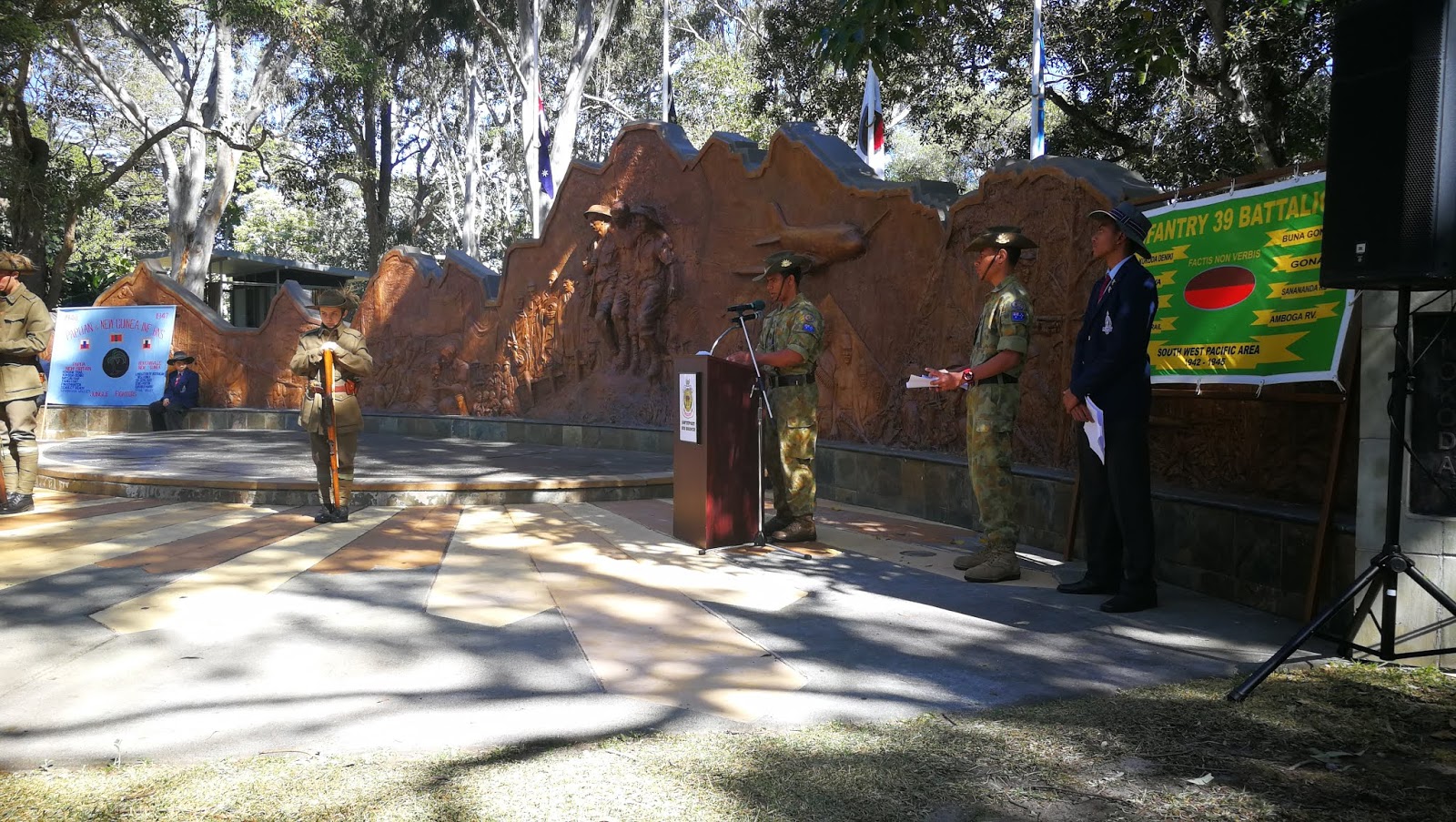
On Wednesday, 8 August, 2018, I was made an honorary member of the "PIB, NGIB, HQ, PIR Association on the occasion of the Kokoda Day Memorial Service to commemorate the 76th anniversary of the Defence of Kokoda (8-10 August, 1942) by the 39th Australian Infantry Battalion, and the Papuan Infantry Battalion.  This auspices day also celebrated the 10th anniversary of the Rotary Kokoda Memorial Wall at the Cascade Gardens, Broadbeach, Gold coast, Australia.

The award: Honorary membership of the PIB, NGIB, HQ, PIR Association
 
Sometimes in June, I received an email from my good friend, George Friend who resides in the Gold Coast, asking for my availability on the day. Without any hesitation, I said, "Yes, I would be honoured to be part of this celebration." My answer was also fuelled by the fact that PIR legend, Lt Col (retired) Maurie Pears, had specifically asked for me to be part of this commemoration; I wasn't going to say otherwise to that. Maurie (as he insisted to be called) had played a crucial and important role in the history of the PIB, the NGIB, and the PIR through the two "TO FIND A PATH" books.

So, I left for the Gold Coast that sunny Tuesday afternoon (Tuesday, 7 August 2018) to participate in this service. I arrived around 5pm and was waiting in the passenger pickup areas for George when a young handsome chap, from PNG, slowly walked up to me, and with a shy but confident manner, asked, "Good afternoon sir, are you Mr Ako?"
I answered in the affirmative.
"Oh good. Name blo mi em Solomon. George sent me. Em waitim yu lo hapsait," and he beckon to me to follow him.

So, I was introduced to Solomon Kasokason.  A tall handsome bloke, who, from my first impression, has a very bright future ahead of him.  His mixture of English and Pidgin, in one sentence, only portrayed his respect for me as an elder; and while acknowledging his knowledge of English, he was also reminding me that he too, respected his roots, as a Papua New Guinean.

With Solomon Kasokason and George Friend at the TSS Chapel
We got on with George and we were off to the Gold Coast.  Along the way George and I discussed a myriad of issues, mainly centred on our favourite topic: the PIB/39th Battalion and the war at Kokoda.  When he asked me about the last Remembrance Day celebrations, I told him that "it would seem to me nowadays that most are only paying lip service to this occasion."
"How come?" he asked.
"Well, what is there to commemorate this occasion?" I said.  "You have a dawn service on the day, which is then followed by a parade and speeches by dignitaries; and topped off with a luncheon; and that's it.  Everyone goes back home to their lives, with the events of the past ten hours gone and forgotten.  There must still be something that can add more value, substance and quality to this occasion so that it is commemorated as it should be." I paused.  "Ironically, most of our uni graduates don't even know what the acronym PIB stands for.  And I don't blame them; how can they know something they haven't being taught," I lamented.
George didn't say anything as we finally drove into the Southport School, where young Solomon goes to. 

According to George, the Southport School is an independent, Anglican, day and boarding school for boys, located in Southport, a suburb on the Gold Coast of Queensland, Australia. Established in 1901 by The Right Reverend Horace Henry Dixon, TSS is the oldest Anglican boys' boarding school in Queensland and the only all-boys boarding school on the Gold Coast. The school has a non-selective enrolment policy and currently caters for approximately 1305 students from pre-school to Year 12, including 276 boarders from Years 7 to 12.

George and Solomon brought me to their Chapel where the honour roll is kept and I met Fr Jonathon Whereat, the Chaplain of the school.  We both then bid Solomon good night and left. 

The TSS Honour Roll

The TSS Chapel

George and Solomon in the Chapel

George pointing to the 39th Battalion banner

The TSS Cadet colors


George, through the Rotary club, had organized for me to stay at the Gold Coast Hilton.  I checked-in, and then we, (me, George and Evelyn, his lovely wife) went off to the Chinese restaurant across the road to have some dinner.  During dinner, George went through the next day's program with me and prepped me up for it.

I woke up around 0530 and went off for my usual 5k run and calisthenics. By 0830 I was at the restaurant where I enjoyed a hearty breakfast. I went back to the room to change and to prep myself for the day, check my speech, etc.  George had reminded me last night that the program would start at 1030 so I was to try to make it to the venue by 1000.  "Well I wasn't going to be late," I said to myself.  I left the hotel at 0940 for the tram line just as the tram was coming in.  I let that one go and decided to wait for the next one which would be coming through at around 0955. George had told me that the trip to the stop near the Cascade Gardens was about 10 minutes.  So, the next tram arrived and I got on.

Gold Coast on a crispy morning

Healthy living

As I made myself comfortable on the seat, I couldn't help but notice three old soldiers - yes, old soldiers - because they had medals on their chest. I immediately deduced that they were on their way to the Service, so I was in good hands.  As a foreigner, you always have these feelings, especially in places you are not familiar with; about getting lost!  I had that for a few seconds when I was getting into the tram: "Am I getting on the correct tram? Or the wrong one, which will take me to the wrong stations? etc, etc, etc." So, seeing these old soldiers with their fruit salads assured me that I was in the correct tram going the correct way.

We all got off at Florida Gardens, and the three warriors immediately set off for the Cascade Gardens.  I quickly walked up to them and asked if I could join them on their walk to the Gardens.  Without any reservations, they said, "By all means, join us; and are you also here for the Kokoda service?" I answered in the affirmative.

As I tagged along with them, I didn't realize it at that moment but something was about to happen; something that would be wonderful and life enriching.  Of these three friends, one was a bit more older than the other two. (They told me later at the luncheon that they were navy who saw service at the Vietnam War; while their older mate had been to the Korean War; but that they had also done service up in Lombrum and Port Moresby from the 1960s onwards).  As we walked, the two younger friends were already setting a quick pace and so we about five paces in front; I decided to walk with their older mate behind.  But one thing that struck me was that every now and then, the two younger friends would back track to their older mate, and with respect and love in their voices, gently encourage him, telling him that it wasn't that far to go, and that only a few more steps and we would be there; that this distance was nothing compared to the training they all did at recruit training camp, and so on, etc.  Their old friend would nod his understanding and in the typical Aussie fashion, tell them to lead on. I think the friends backtracked a total of six times in that 20 minutes until we arrived at the Cascade gardens.  It was only a 5-minutes walk from the stop.

By the time we arrived at the Cascade Gardens, the place was already swarming with veterans who had seen service in PNG.  I excused myself from the three friends and went off to look for George.  Before I could walk any further, I saw an old man alight from a vehicle.  He had a walking stick.  "That must be Maurie Pears," I thought.  During last night's dinner, Evelyn had told me that Maurie (as he liked to be called) used a walking stick.
I walked up slowly to him, and tapped him on the shoulders and said, "Good morning, Sir. Are you Mr Maurie Pears?" I asked. "I am Lah..."
Before I could complete my introductions, Maurie gave a loud shout, and yelled out my name, "LAHUI AKO!"
I was caught with surprise and bewilderment.
"Boys, come on over here. This is the gentleman we have been talking about these past weeks.  Lahui Ako. He came, boys. He made it!"
I got introduced to about ten or so veterans in the next 10 minutes, as Maurie proceeded on to introduce me to this person, and that person, and that persons and that person...; and they all had the same sentiment, "Thank you for accepting our invitation and coming to graze us with your presence."
I could only nod in bewilderment and confusion. "Why are they treating me like a VIP?  I am 30-40 years younger than all of them; it should be me doing that to them," I thought to myself with confusion written all over my face.


Bill McGrath, of Pacific Book House

Maurie, posing with Bill McGrath

Maurie and Greg Ivey

Maurie being asked to sign copies of the two "To Find a Path" Books


With Greg Ivey

Maurie and Evelyn, George's wife.

Maurie and Don Graham, sharing notes.

George Friend, OAM, of the Rotary Broadwater Southport, was the Master-of-Ceremony; and around 10:15 he called the gathering to order, and commenced the program. 

George, doing his Master-of-Ceremony work


The ceremony was opened with a prayer by Fr Whereat (yes, the TSS Chaplain I met last night), followed by the hymn, Abide with Me.  George then invited Maurie Pears, MC to give the Governor-General's Message to the gathering. 

Maurie, reading Governor-General Cosgrove's message to the gathering

Governor-General Cosgrove's message. This is my framed copy, presented to me by the Rotary Club of Broadwater, Southport

After Maurie had delivered the Governor-General's message, George then invited me to give the Keynote Address to the gathering.  Below is the Keynote speech I gave to this esteemed gathering:

Excellencies,
Ladies and Gentlemen;
Boys and girls;

Many Papuans and New Guineans fought the enemy when the war came to Papua in 1942 – either with the Allied forces or with the Japanese – as carriers, labourers, and informers. Of these, some 3,000 of them fought as regular soldiers under the banner of the Papuan and New Guinea Infantry Battalions. All fought for their own reasons: some were teenagers who joined to attain status, or because they were coerced into joining. Others made the transition from the constabulary into the army.

After the setback of the Coral Sea Battle, the enemy decided to try a two-prong assault on Port Moresby with their land forces. On 21 July 1942, they landed near Gona with more than a thousand, mostly Tolai, carriers. Lightly equipped, the 3,000 troops quickly set off inland for Kokoda, where there was a small but vital airstrip – their springboard for the final attack on Port Moresby.

They were virtually unopposed until they ran into a PIB ambush at a place called Awala. They brushed this puny defence aside and advanced. Kokoda was in their hands barely a week after the landings.

What a lot of people today do not realize is that this historic PIB ambush at Awala was the beginning of a bond – a bond of camaraderie, love and friendship, commitment and understanding, courage and perseverance, and of loyalty and the ultimate sacrifice, between warriors of mostly different races, but fighting a common enemy – a bond that would span throughout the duration of the war, right up to the disbanding of the PIB in 1946; a bond that would be reignited with the reformation of the PIR in 1951 and continue right past 1976 when the newly independent state of Papua New Guinea assumed full ownership of its armed forces right up to this very day.

For the Papuan, it mattered little where the war intruded from; only that his immediate territory had been invaded; and therefore, it was his tribal duty and responsibility to fight off the invaders of his land. The Kokoda campaign therefore, became, for the most part, a fight to keep the invaders away from their own villages and livelihood.

Today, as we solemnly gather here to commemorate the Battle of Kokoda, and the 10th anniversary of the Rotary Kokoda Memorial Wall, I would like to pay homage and tribute to all those Papuan and indigenous soldiers who fought for the safety and livelihood of their homes and villages.  

Unbeknown to them, they were part of the world’s greatest struggle against tyranny and oppression by an enemy fully committed to world domination; and they triumphed.

In the same vein, I would also like to pay my respects to those young Australian warriors, who saw fit to lay down their lives in the defence of their homes. It is for these men, and those who walked out of this Battle alive, that we must work hard to forever keep their memories, lest we forget.  

These warriors, despite the difference of their lifestyles and upbringings, stood together as one, to fight off the invader.

This bond, between the Australian and the Papua New Guinean warrior, forged in blood, in the jungles of Kokoda, has remained right up to this very day, as one of the commonwealth’s strongest bilateral relations between any two of its members.

So, as I stand here, humbly, in your esteemed presence, my Australian friends, many of whom I gladly call my brothers, have been up in Port Moresby these past 12 or so months, helping us play host to the year-long Asia-Pacific Economic Cooperation (APEC) series of meetings, that will culminate with the Leaders’ Summit this November. This is this very bond I am talking about.

I will conclude by saying that the Battle of Kokoda, and the ensuing battles after that, was the biggest ever capacity building exercise provided to thousands of Papua New Guineans by Australia then. The knowledge they acquired during that war, be it on leadership, navigation, as medics, cooks, storemen, logistics, and teachers of men – all these was put to good use when they returned home to their villages after the war. Some entered politics, others continued to serve their local communities in their own respective capacities. Most used these training to better the livelihood of their communities.

Seventy-six years on, this legacy has continued. Today, another massive capacity building exercise is again in motion in Port Moresby, as PNG prepares to complete its hosting year with the APEC Leaders’ Summit in November. Again, our brothers from Australia are assisting us with its preparations.  

We Papua New Guineans of this generation, are optimistic that the capacity building and training offered by Australia to hundreds of our officials, will again be put to good use beyond APEC, to better our lives, and in that process, advance our ever burgeoning relations to the next levels.

I pray that God continues to nurture this friendship forever, lest we forget.

Thank you.


After the Keynote address, George called for the Catafalque Party to mount.  This Guard party was formed by the school cadets from the TSS.  They stood to, while the laying of the wreaths commenced.  I was also called upon to lay a wreath on behalf of the Government of Papua New Guinea. 

The Catafalque party


This was then followed immediately by the announcing of the honour roll of the 39th Battalion and the PIB.  This was done by TSS cadets and Papua New Guineans, Anthony Apana, and Solomon Kasokason.  This brought some emotions with it.  Because while could view this as a formality, the fact that it was being read to the gathering by the two true-born Papua New Guineans was significant.  This portrayed the message to the world that we Papua New Guineans, too, honour those warriors who fought for our freedom to win back Kokoda from the invading Japanese forces.

Anthony Apana, reading the honour roll.

Solomon Kasokason reading the honour roll.

After the laying of the wreaths, the Ode was read by Mr Craig Thomas, Director of the Southport RSL.  This was immediately followed by the "Last Post", then by the "Rouse".  Father Whereat then gave the benediction.  After the benediction, the National Anthems of PNG and Australia were sung.  The dismounting of the Catafalque Party formally ended the Service.

After greeting and meeting numerous members of the gathering, I was led away by Mr Donald Graham, the President of the PIB, NGIB, HQ, PIR Association, to the behind of the Rotary Kokoda Memorial Wall - to another ceremony.  This ceremony was officiated by Mr Graham himself and it was to show me the pavement behind the Wall which now had the names of all the highly decorated PIB and NGIB heroes.  At the end of his speech, I was literally bowled over, when they presented to me my certificated inducting me into the "PIB, NGIB, HQ, PIR Association" as an Honorary Member.  I was dumbfound, bewildered, and completely caught off guard for this honour.  As I said my words of appreciations, thanking these esteemed gentlemen and their wives, for this great honour, I was thinking to myself: "I am truly undeserving of this honour.  For goodness, I feel like an interloper, stepping onto grounds which I have no right to step on . . ." 

Names of the PIB and NGIB heroes, forever engraved on the pavement of the Rotary Kokoda Memorial Wall
 We then all went off to the RSL Club for luncheon.  I immediately went off in search of the three old warriors who had led me to the Cascade Gardens.  When they saw me approach them, one of them called out, "And you told us that you were here to witness the occasion. you never said anything about a Keynote address!"
I looked sheepishly at them and said, "But you never asked me what I was here for, eh?"
They all laughed and told me to join them.

Luncheon at the RSL Club, Gold Coast.


The friends whom I walked with to Cascade garden. The old soldier is seated while the two younger friends are on my sides

With Maj (rtd) Donald Graham, President of the PIB, NGIB, HQ, PIR Association

With Don, and Sgt (rtd) Ken Horton, Secretary of the PIB, NGIB, HQ, PIR Association

The crowd at the luncheon


John Gorski, who was a Stoker on one of the naval ship, and who called in now and then in the 1960s into Lombrum also gave me his Stoker's badge, saying, "Lahui, I am giving you this, firstly to show you that the Navy remains the best military fighting force in the world (to much laughter from the gathering); but most importantly, I want you to remember our walk after we got off the tram until we arrived at the Cascade gardens."
"That was one of the most important walks I ever made in my life," I told them.
"How come?" They chorused?
"Well, because in that 20 minutes walk, I learnt about - caring, love for your mates, commitment, and encouraging one another as we work towards our objectives in life. All in all, this was TEAM WORK in its true practical sense," I told them; and as I talked, their laughter subsided and they became very quiet and thoughtful as they pondered on my assessment.

John Gorski, the Stoker. Notice that the Stoker's Badge is no longer on his tie.

The friends. The Stoker's Badge is still on Mr Gorski's tie.

Then I went over to join Mr Graham and the other members of the party at their table for a coffee.  Maj (retired) Don Graham (President), and Sgt (retired) Ken Norton (Secretary) of the PIB, NGIB, HQ, PIR Association had served during different times at Taurama Barracks. Don served in the 1950s while Ken served in the 1960s.

Both these gentlemen, and the countless others, were responsible for the reactivation of the PIR.  You will remember that the PIB was demobbed in 1946.  Five years later, in 1951. The background of this reactivation goes further than that as it involves the responsibility given to Australian by the UN.
 
(The following is extracted from my upcoming book):

While Papua remained an Australian territory after the war the legal position regarding New Guinea was different. On 13 December, 1946, the UN granted Australia a Trusteeship over what was now the Trust Territory of New Guinea. Article IV of the Trusteeship Agreement made Australia the Administrative Authority responsible for “Peace, Order, Good Governance, and Defence” of the Territory, while Article VII of the Trusteeship authorized it to take “all measures” desirable “to provide for the Defence of the Territory, and for the maintenance of internal Peace and Security.”[1]

With this, Australia now had the legal and moral duty to defend PNG, whose security had always been seen to be bound up with that of Australia’s. In fact, defence and security considerations were the principle reasons why Australia urged a reluctant Great Britain, in the first place, into annexing British New Guinea in 1884. Commodore Erskine’s ceremony atop Hanuabada’s Metoreia Hill is evidence of this undertaking. However, in the early post-WW2 years, there appeared to be no real need to reestablish an army presence in PNG. Rightly so too, as was argued by its administrators. The only security risk was further up north in Korea, they concluded.

But one senior army officer by the name of Major-General V.C Secombe, CBE, thought otherwise. General Secombe happened to be the General Officer Commanding (GOC) Northern Command and he took great personal interest in this issue, and made others become aware of this issue.  

So, considerations began to surface on this very issue, and the main question became: what form would this take? Answers were demanded on the military effectiveness, discipline and reliability of “native” troops, if such an idea was to be implemented. Would training Papua New Guineans in the use of arm pose problems for the post-war administrations, some asked? Critics made reference to “racial issues” immediately after the war to defend their reasoning.

In July 1949, Colonel J.K Murray, Administrator of the Territory, called for the immediate establishment of a “whites only” unit along the lines of the wartime NGVR, to be known as the PNG Volunteer Rifles (PNGVR). On 23 July, Percy Spender, the Minister for External Territories, announced Cabinet’s approval for the PNGVR to be raised. According to Sinclair (To Find a Path: Volume 2), a letter in the Sydney Morning Herald on 1 February 1950, suggested that “it would be regrettable if PNGVR was raised unless a native militia was raised as well”. This was already under consideration. On 1 June 1950, Spender confirmed that approval had been granted by Cabinet, for the establishment of a PNG division of the Royal Australian Navy. The establishment of a “native regiment” was also under consideration. So, on 23 November 1950, the ARA HQ issued the Raising Instruction.

This move was received with mixed feelings in PNG. Most of the key officers in ANGAU had been ex-officers of the pre-war Administrations. A number of them had returned to become the first post-war District Officers and Assistant District Officers. Some retained their old prejudices. Many people in commerce and on plantations doubted the wisdom of “raising Native units” in peacetime. But there was also strong support from a number of members of one influential section of the white population – the Returned Services League (RSL).

Still, the decision to raise the PIR had been made; but it would be some time before it was implemented. The PIR was placed under the command of Maj-Gen Secombe. Land was secured and Taurama Barracks came into being, with the civilian Administration acting as the Recruiting Agency pending the arrival of the ARA Advance team to commence the recruitment process. On 16 February 1951, the ARA Advance Party arrived from Brisbane. It was headed by Major W.R.J. Shields as acting CO PIR, and included Captain R. Orme, and WO2s Jack Ord, Pat Williams and Ken Wood. The team had been very carefully chosen – Shields and Ord had previously served with the NGIB, while Orme had been with the PIB during WW2.[2] They were old hands in the game, so to speak.

Word on this recruitment exercise had gone out to the hinterlands and coasts. How it reached far and wide, without telephones and effective radio communications, remains a mystery. Still, this news was received by the veterans with much joy and happiness. Nearly all the WW2 veterans, who couldn’t fit back into their own traditional societies. flocked back to take up arms again. Recruitment began on the day the Party arrived and Capt Orme enlisted ten men that day. The honor of being the first PNG recruit fell on the proud shoulders of Boino Warko from the northern district. Warko had served in the Constabulary during WW2. Over the next couple of days, a total of 81 men would be enlisted in this first draft; Included in this first draft, would be a slimly built man from Loupom Island in the Abau district, named George Ilau Bae whose Service Number would be 802.  

On 11 March 1951, the PIR became a unit in the Australian Army. 

It was because of the above, that men like Maj (rtd) Graham, Sgt (rtd) Norton, and Sgt (rtd) Greg Ivey would see service at Taurama and Igam Barracks - providing capacity building to the infant military organization.  These men, and countless others, would serve in their respective capacities from 1951 up to 1976 when all military powers would be handed over to the newly independent State of Papua New Guinea.

Sitting down and listening to them, I realized their drive in maintaining the history of something they built and love so well right up to this day - the PIR. 

Later, after I was generously given a lift to Brisbane by Greg Ivey, and as we were saying our farewells and me thanking him for everything, this was what he said, "No. Thank you, Lahui. Today was the start of a new chapter in the life of this association.  For years, the PIB and the NGIB's role in WW2 has always been told by Australians.  Your Nameless Warriors book, is the first ever book on WW2 in PNG, written by a Papua New Guinean. You captured the spirit of the PIB and the NGIB in it.  This spirit can never be replicated by any Australian ever.  But by a true-born Papuan, like yourself, yes."

I could only nod at him as he got in his car and took off to his home on the Sunshine coast. There were huge lumps in my throat.

On the road with Greg to Brisbane.

Wednesday, 8 August, 2018 will forever remain a very significant date in my life:

1. The awarding of an Honorary Membership into the PIB, NGIB, HQ, PIR Association.
- My next project, with a tentative publishing date of first quarter, 2019, will pay homage to this honour.  The book will portray one of the famous military families in PNG, and their travels from the reactivation of the PIR in 1951 right up to the pinnacle of the PNGDF hierarchy in 2010.

2. The TSS and the role they play as cadets.
- Shouldnt it be high time the powers that may be start considering the reactivation of the cadet scheme in PNG?  Such a scheme will provide the necessary support needed by the organizers of the annual Remembrance Day Celebrations and ensure that these occasions become meaningful and can be maintained annually for generations to come. I remain of the view that our Remembrance Day celebrations lack substance and we utter the words "Lest we forget" without meaning it.

3. I will continue to write, write, write, and write about our wartime heritage so that all our generations, including those who are yet to be born, will know how our freedom was won!

LEST WE FORGET

Dinner with George and Evelyn.

With the PIR legend, Lt Col (rtd) Maurie Pears, MC


[1] Sinclaire, James (1991), To Find a Path: Volume 2, Page 44
[2] Sinclair, Page 46